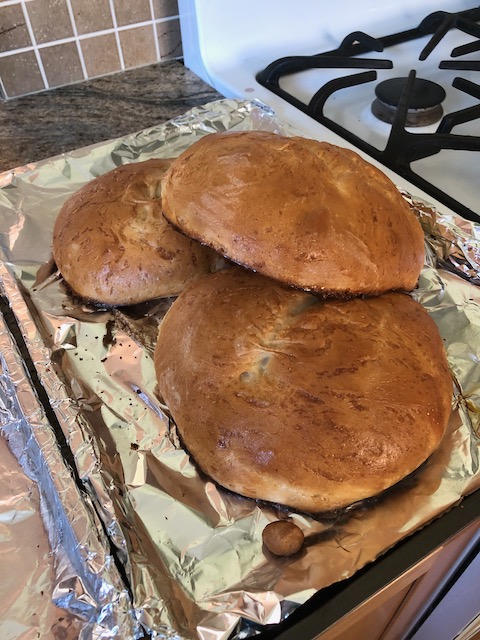
| I have just finished a book called HumanKind that I bought because I heard the author (Rutger Bregman) interviewed on NPR, and liked what he had to say. He hits a lot of points that I've heard in the last few years and puts them all together. Here are a handful of them: -The strategic bombing campaigns of WWII strengthened the victims, and did not destroy their morale. This has been generally the case. -We tend to imagine that we are generous but that everyone else is selfish. Real evidence from real instances of tragedy shows people being mutually helpful. -Lord of the Flies is fiction. In a real story of a group of Fijian boys marooned for more than a year, they helped each other and survived with no casualties -Soldiers in wartime tend to try very hard not to shoot anybody. They try to look busy without actually doing anything. Casualties are overwhelmingly the result of long-distance weapons like artillery that inflict harm without the aggressor having to see the victim. This is like the tram problem. -Most experiments that have been claimed to show that people are sadistic and indifferent to others were badly-designed or even faked. The one exception is the Milgram shock machine, but if you look at that closely it shows that people want to be helpful to a cause that they consider important. When people were ordered to give the shock, they uniformly refused. -Children need time to play without structure. That's how they learn. Parents are all over their children these days, and that's not helpful. Other Reading and the rest of life: Many people probably think that Harry Potter is a wholly original creation, but actually it is just another in a very long succession of books about boys (and occasionally girls) going away to school. The book that kicked off the genre was Tom Brown's Schooldays, which was written more than a hundred and fifty years ago. I figured that someone must have written about how Harry fits into this long tradition, and a single search found me a very interesting essay on the topic. That essay mentioned a history of the such books called "The Heirs of Tom Brown" which I immediately bought. It's a very enjoyable book that has a lot to say about public schools and their place in English society as well as the novels that describe them. I was talking about this with Howie today, and he agreed with my intuition that yeshiva is very much the parallel in the frum world to public school in the England of the past. We've been learning Talmud in Howie's back yard recently, and are making progress at an unparalleled rate. We're liable to finish the tractate we've been working on for ten years within the next couple of months. Steve Fassberg and I are making revisions to a paper which we presented together at a conference a couple of years ago. It will be coming out in the Journal of Aramaic Studies. I'm sure you all have a subscription, so look out for it in a year or so. I have a lot of tomatoes just starting to grow on my vines in the back garden, and a few peppers, too. Also, the piece of ginger sitting on my counter has started to sprout, so I'm going to try growing it in the house. I baked bread a couple of days ago, and it came out very well as you can see in the picture. Recently I've also been making a Sri Lankan deep-fried food kind of like falafel, which is a big crowd-pleaser at Avi's house. I hope everyone is well and happy, and I look forward to seeing you soon! |
| Created on 19 July 2020, updated on 21 July 2020 by Samuel Ethan Fox |
| Comments on this entry |
| Bread and falafel Samuel Ethan Fox |
| The Sri Lankan falafel is called vada. Its made out of lentils that you soak for a few hours and then grind in the food... |
| Recipe Deena Fox |
| Send the recipe for the Sri Lankan falafel! What is the base ingredient? And what type of bread did you bake? |