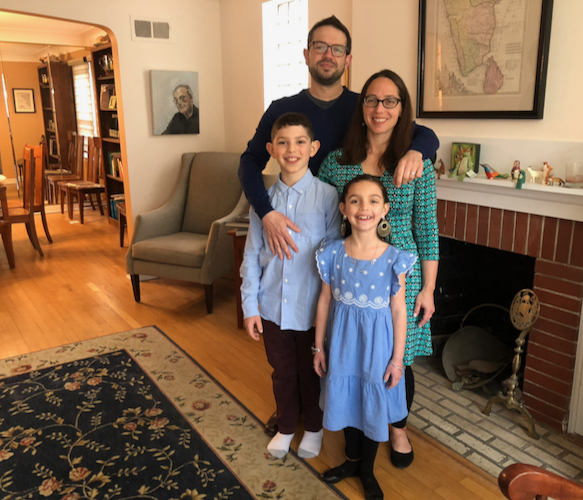
| One part of the haggadah which gets relatively little attention is a paragraph in the magid section that is centered on three verses from chapter 24 of the book of Joshua: ב וַיֹּאמֶר יְהוֹשֻׁעַ אֶל-כָּל-הָעָם, כֹּה-אָמַר יְהוָה אֱלֹהֵי יִשְׂרָאֵל, בְּעֵבֶר הַנָּהָר יָשְׁבוּ אֲבוֹתֵיכֶם מֵעוֹלָם, תֶּרַח אֲבִי אַבְרָהָם וַאֲבִי נָחוֹר; וַיַּעַבְדוּ, אֱלֹהִים אֲחֵרִים. ג וָאֶקַּח אֶת-אֲבִיכֶם אֶת-אַבְרָהָם, מֵעֵבֶר הַנָּהָר, וָאוֹלֵךְ אֹתוֹ, בְּכָל-אֶרֶץ כְּנָעַן; וארב (וָאַרְבֶּה), אֶת-זַרְעוֹ, וָאֶתֶּן-לוֹ, אֶת-יִצְחָק. ד וָאֶתֵּן לְיִצְחָק, אֶת-יַעֲקֹב וְאֶת-עֵשָׂו; וָאֶתֵּן לְעֵשָׂו אֶת-הַר שֵׂעִיר, לָרֶשֶׁת אוֹתוֹ, וְיַעֲקֹב וּבָנָיו, יָרְדוּ מִצְרָיִם. And Joshua said to all the people, “This is what Adonai, the Lord of Israel says: Your ancestors, including Terah the father of Abraham and Nahor, always lived across the river, and they worshiped other gods, And I brought your father Abraham over the river, and I led him through all the land of Canaan, and I multiplied his descendents and I gave him Isaac. I gave Jacob and Esau to Isaac, and I gave Mount Seir to Esau to inherit, and Jacob and his sons went down to Egypt.” Joshua is the appointed successor of Moses, and he repeats some aspects of his mentor’s career. For example, he leads the people into the land of Israel by crossing the Jordan, which dries up to let them cross, just as the Sea of Reeds dried up to let the people escape the Egyptians. And just as Moses gives a final speech admonishing the people to be faithful to their God, so does Joshua, and it is from that speech that these verses are drawn. Joshua does not begin the story in Canaan, but rather goes all the way back to Iraq, where Avram’s family lived (the Aramaic translation of these verses clarifies that the river that is mentioned is the Euphrates, not the Jordan). Beginning the story several generations earlier changes its character. It's not just a story of a single episode that begins and ends in the land of Israel. Rather, it’s a story of repeated migration: From Ur to Haran, from Haran to Canaan, from Canaan to Egypt, and finally, from Egypt to Canaan. Our own personal family stories, like those of most Jews, are based around migration. For example, my father-in-law Walter Fried migrated from Austria to escape a murderous tyranny and came to America where he built a new life. A few decades earlier, my grandfather Sam Fox escaped the evil tsarist regime and also came to America. So the story of the Exodus, while it is a one-time unique story of the formation of the Jewish people, is at the same time a recognition of an important part of Jewish life that has repeated itself over and over. And looking around us we can see this story reflected in the lives of the many other people who live in America, who are in great majority also migrants. Even native Americans most often live in places far from their original homes as a result of forced migrations. We are asked to see ourselves as participants in the Exodus. Looked at this way, we really are. We had wonderful seders, and two of my daughters were here in Chicago to share them with me. I wish you all health and joy. |
| Created on 9 April 2023, updated on 9 April 2023 by Samuel Ethan Fox |